In this one-day introductory lesson, students will be able to identify and explain the key events, major themes, and defining characteristics of the Great Depression era of history and how this era affected Texas.
THIS UNIT
Browse unit contents using the tabs to the right or the filters below.
Share
Tell other teachers, parents, and students about us.
Follow
Pacing
Total length of all materials in the unit: 17 – 19 days
- 11 – 13 Estimated Instructional Days
- 3 Optional Extension Activity
-
3 optional review days prior to assessment
- 12 – 15 Estimated Instructional Days
- 4 – 6 Optional Extension Days
- 3 Optional review days prior to assessment
Just the Basics:
To meet the TEKS requirements while minimizing the amount of time spent in the unit, educators can focus solely on the following lessons (Approximately 8 - 10 class periods)
- The Big Picture (1 class period)
- Vocabulary (2 class periods)
- What’s the Story? (1 - 2 class periods)
- Stock Market Crash of 1929 (1 class period)
- The Dust Bowl (1 class period)
- New Deal Alphabet Soup (2 class periods)
- Who’s Who of the Great Depression – John Nance Garner (1 class period)
Contents
Era Overview
The Great Depression (1929-1941) was the worst financial crises ever faced by Texans and Americans. When the stock market crashed in October 1929, Americans lost $40 billion overnight and everything began falling apart. Businesses and banks soon collapsed, which meant that suddenly no one was buying the two major exports offered by Texans: cotton and oil. The Texas economy, as a result, quickly collapsed and by 1934 more than a million Texans needed help just feeding and clothing their families.
In the depths of the crisis, Texans helped elect Franklin Roosevelt as president. Roosevelt had promised to address the Great Depression by giving Americans a “New Deal,” which was a series of programs and agencies that each tackled problems brought on by the Depression. These New Deal programs did a lot of things, but most focused on putting Americans back to work by having the U.S. government hire people to do things like build new roads, bridges, libraries, post offices, and the like. And so the federal government set up new programs like the Works Progress Administration, which hired 8.5 million Americans and eventually built 8,000 parks, 125,000 buildings, and more than 650,000 miles of roads during the 1930s.
In so doing, the New Deal built much-needed infrastructure and transformed the lives of rural Texans by bringing electricity to places like the Hill Country. Yet it did not solve everything. Although the economy had gotten better by the late 1930s, the Depression had not yet ended. Some Texans worried that the federal government might be doing too much and that Franklin Roosevelt might be overstepping his powers as president. Other people, however, worried that Roosevelt and the government had not done enough to end the Great Depression.
Then, suddenly, the United States entered World War II, and everything changed once again. The massive mobilization for war required by World War II would, once again, transform Texas and finally ended the financial crisis of the Great Depression.
Unit Level Downloads (English)
-
Downloadable/Editable versions of the English language unit plan. Provides an Era Overview and pacing, and outlines each lesson’s estimated completion time, essential questions, a description of each lesson, and student learning experiences and activities.
Other Units
Lessons
Most lessons contain downloadable and printable documents, activities, and other resources to aid in classroom instruction. Lesson materials are available in multiple formats and typically contain variations based on learning needs. Learn more about alternative formats here.

The Big Picture
Unit Plan # 1
45-60 min
none
71A
77E
720A
720B

How Do We Know What We Know?
In this one day lesson, students will examine and analyze a variety of primary source materials to identify major themes, topics, and events of the era including challenges and hardships related to the Dust Bowl, life in rural and urban areas, agricultural work, and New Deal programs to address these challenges.
Unit Plan # 2
45-60 min
none
71A
77E
79A
720A
720B
720B
722B

Vocabulary
In this two-day lesson, students will learn key terms related to the Great Depression and be able to identify, define and give an example of each term within the context of the Great Depression era.
Unit Plan # 3
90-165 min
none
71A
77E
79A
79B
720A
720B
720C
721B
722B

What's the Story?
In this two-day lesson, students will examine six readings presenting significant events that took place during the Great Depression including the stock market crash, the establishment of New Deal programs, and the Dust Bowl, and identify their significance to United States and Texas history.
Unit Plan # 4
90-120 min
none
77E
79A
79B
717B
720B

Who's Who of the Great Depression
In this one or multi-day optional extension lesson, students will read passages about key people of the Great Depression to identify and summarize each person’s significance to the era. This lesson includes multiple ways to interact with the materials including biographical fact sheets, a dinner party activity, “I have / Who has” and student worksheets.
Extension
45-180 min
none
720B

The Stock Market Crash of 1929
In this one-day lesson, students will investigate the effects of the stock market crash on people who had invested in the market as well as the American economy as a whole by taking part in an investment simulation activity.
Unit Plan # 5
45-60 min
none
77B
77E
720A
720B
723B

The Dust Bowl
In this one-day lesson, students will be able to explain what the Dust Bowl was and provide some of its primary causes and effects by examining and analyzing a set of primary source materials including newspaper articles, transcripts of oral history interviews, and images. There is an optional 30-45 minute writing activity that can conclude the lesson.
Unit Plan # 6
45-60 min
none
77B
79A
79B
720A
720B
720C
720D

New Deal Alphabet Soup
In this one day lesson, students will examine the key components and goals of up to 16 New Deal programs. They will determine which programs would have been most beneficial to Texas based on the specific challenges facing Texans during the Great Depression, and they will create a “recipe” of their chosen New Deal programs.
Unit Plan # 7
90-120 min
none
77E
720B
720E
722D
723B

East Texas Oil Wars
In this optional one-day extension lesson, students will examine the events, causes, effects, and significance of the “east Texas oil wars” which played a significant role in influencing the U.S. oil industry and economy during the Great Depression.
Extension
45-60 min
none
77B
79A
720B
720E

The Civilian Conservation Corps Extension
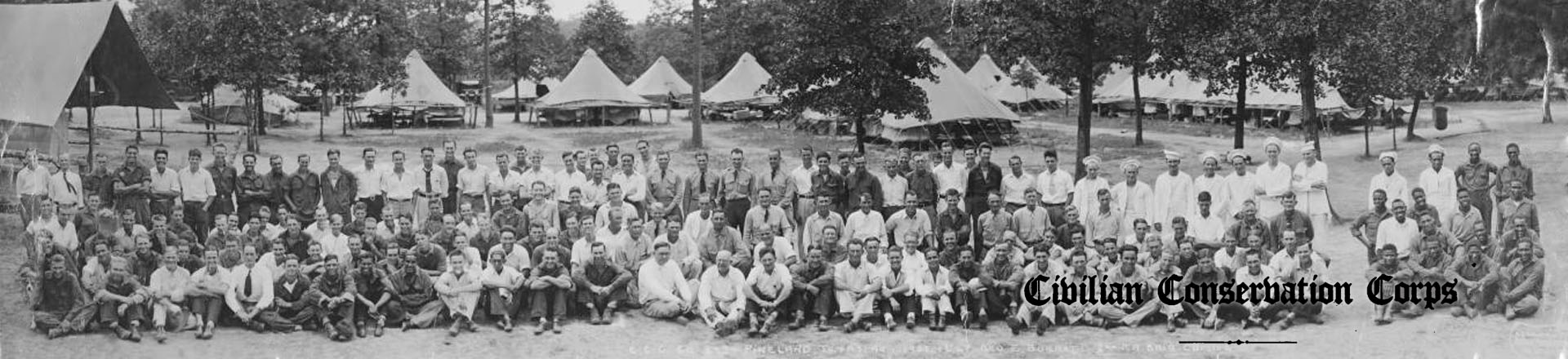
In this one day lesson, students will examine primary source excerpts from an interview with a former Civilian Conservation Corps (CCC) member to determine how the CCC impacted his life, his family, Texas farmers, and the environment.
Extension
45-60 min
none
77B
79A
720A
720B
720C
720D
721B
722B

Texas Today
In this one day lesson, students will examine the long-lasting influence of the Civilian Conservation Corps as it relates to its work in the establishment of the state park system of Texas.
Unit Plan # 8
45-60 min
none
79A
720A
720B
720C

Looking Ahead
In this one-day lesson, students will examine two primary source materials addressing the initial events that caused the outbreak of World War II and the bombing of Pearl Harbor. Students will make observations, inferences, and predictions about the events of the next unit based on the primary sources.
Unit Plan # 9
45-60 min
none
720A
720B

Study Guide and Flashcards
In this one day optional review lesson, students will identify the significance of key terms, cause and effect relationships between significant events, and answer practice test questions based on 8th grade social studies STAAR item types including multi-response, inline choice, a paper-adapted version of drag and drop, multi-part, and short constructed response to prepare for the unit 12 test.
Review
45-60 min
none
71A
77B
77E
79A
717B
720A
720B
720C
722A

Review Mind Map
In this optional one-day review lesson, students will create a visual representation of terms and concepts from the unit in the form of a mind map. Students will be able to identify how information from the unit is connected by making connections between terms on a mind map.
Review
45-60 min
none
71A
77B
77E
79A
717B
720A
720B
720C
722A

Review Bingo Game
In this optional one-day review lesson, students will review key terms, ideas, people, places, events, and major themes of the Great Depression by playing Bingo using terms from the unit and clues about each term.
Review
45-60 min
none
71A
77B
77E
79A
717B
720B
Maps
We've assembled the following list of maps that are applicable to the Great Depression Unit.

Southwestern road map : 1929 official road map (showing roads radiating from El Paso, Texas with mileage between points)
"Map shows lesser and major highways, cities and towns, and points of interest for the southwestern states of Texas, New Mexico, Arizona, northern Mexico, and the southern portions of California, Nevada, Utah, and Colorado; distances between cities."
Soil map, Nacogdoches County, Texas
"Map displays soil types along with creeks, rivers, bridges, crossings, landings, lumber camps, lumber railroads, towns, churches, schools, stores, roads, and commercial railroads."
McKinney Station Map Houston & Texas Central R.R. Operated by the T. and N.O.R.R.CO.
"Station map of McKinney, Texas in Collin County from station 15623+47 to station 15679+20. Highlights estimated sale and carve out areas."
Block Map of Original Town, Abilene, Texas
"Cadastral map of the town of Abilene, Texas showing property lots as well as creeks and railroad tracks."
Map of the Gulf Coast from Padre Island to Rockport
"Map shows early nineteenth century coastal detail of the islands surrounding Corpus Christi Bay in South Texas."
Proposed Trinity River canal & conservancy district
"Map shows district boundaries encompassing Fort Worth and Dallas connected by the Trinity River; land patents, landowners, towns, roads, and railroads."
A Map to help you enjoy all the scenic historic Southwest
"Map pictorially shows points of interest across the western half of Texas, southern New Mexico, and southwestern Arizona. Includes legend."
Map of Texas
"Map shows graphic depiction of historic events, places, and trails. Includes dates and locations of events; illustrations in margins."
Official map of the highway system of Texas
"Map shows the Pan American Highway, major federal and state highways across Texas, counties, cities, free and toll bridges, free and toll ferries."
Texas Centennial Central Exposition: master plot plan
"Map shows structures, streets, and park features for the 1936 Texas Centenial Exposition. This location is now known as Fair Park and is home to the Texas State Fair."
Map of Texas Frontier Centennial fairgrounds, Fort Worth, Texas
"Map shows layout and locations of proposed buildings and features of the Texas Frontier Centennial held in 1936; West Lancaster Extension."
Official map of the highway system of Texas
"Map shows counties, major cities and towns, highways, major roads, and state parks."
Lake Dallas, Denton County, Texas : holograph, 1938
"Map showing camps and points along the shore of Lake Dallas."
Power transmission lines and power plants in Texas
"Map shows county boundaries, cities and towns along power transmission lines, and power plant locations. Includes legend indicating voltage production levels."
Texas: The Lone Star State
"Pictorial and historical map of Texas, with complementary notes and text on Exploration 1519-1685, Missions and Spanish 1682-1819, Colonization, Rumbles of Revolt, The Republic, Statehood 1845, and Secession. Map shows flags of six nations over Texas, counties and regions by terrain and vegetation type, missions, roads, the size and population, and categories of industry and agriculture by location."
Road Map of Dallas County, Texas
"Map shows county districts 1 through 4, numbers and names for county roads, railroads, street grids for cities and towns, levee improvement districts, and military facilities."
Videos
We provide videos for both continuing education and classroom use. Please see each video's descriptive page for related resources and details about accessibility and viewing options.

Preview of The Great Depression
A short introductory video to the Great Depression Unit. Includes worksheets and/or other attachments.
Road to the Great Depression
The early 20th century in Texas, covering: Collapse of the KKK, Roaring Twenties, Everything Falls Apart.
More Resources
The following list of resources provide additional information to help you dive deeper into the context of the unit. Books are linked to OCLC WorldCat, allowing you find a copy in your nearest local library or to make a request for it using interlibrary loan.
General
website Results for the Great Depression Period in The Portal to Texas History
Digital copies of primary sources and other documents from our about this time period contributed to The Portal to Texas History by institutional partners from across the State.